
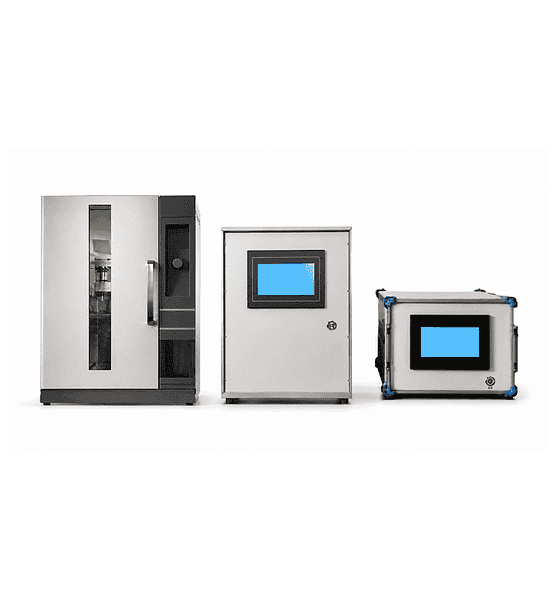
Gasoline Engine Electronic Port Fuel Injector (PFI) Clogging Tendency Tester (GB/T 19230.3, ASTM D 6421)
The QYPFI-type gasoline fuel injector flow loss tester (PFI) is designed to evaluate the cleaning performance of automotive gasoline and the effectiveness of gasoline detergent additives. The test data exhibits good repeatability, discriminability, and reproducibility.
Main Technical Parameters
Ø (1) Test temperature: (160 ± 5) °C;
Ø (2) Fuel circulation pressure: (263 ± 6.8) kPa;
Ø (3) Number of cycles: 22 cycles per set (2 sets in total, 44 cycles), with the aluminum heating substrate temperature cooled down to (24±3)°C after each set is completed;
(4) Pulse duration: (15±1) s, accuracy 0.1 s;
Ø (5) Holding time: 60 min;
Ø (6) Rinse time: 10 seconds;
Ø (7) Fueling time: 0 to 99 seconds;
Ø (8) Cooling time: 10 min;
Ø (9) Flow time: (12±0.5 s; (10) Spray method: full spray in one go.
Product Name: Electronic Port Fuel Injector (PFI) Clogging Tendency Tester
Product Model: QYPFI Type
Product complies with standards: GB/T 19230.3, ASTM D 6421
Main function: Used to evaluate the cleanliness of gasoline detergent, automotive gasoline, and its component oils on electronic port fuel injectors (PFI), meeting the latest requirements of GB/T 19230.3 "Test methods for evaluating the effectiveness of gasoline detergents—Part 3: Test method for the effect of gasoline detergents on the tendency of electronic port fuel injectors (PFI) to clog."
Method Summary: The test employed a simulated fuel system, in which a heat source was used to heat and maintain the temperature of the fuel nozzle, simulating the nozzle temperature during vehicle operation. Before each test, nozzles meeting specific clogging requirements were selected, and four cleaned nozzles were installed onto an aluminum heating base plate. A stainless steel fuel reservoir was filled with 2 liters of test gasoline. The test consisted of two groups, each comprising 22 cycles, for a total of 44 cycles. After completion, the clogging rate of each nozzle was determined based on changes in its flow rate.
