Beijing Chaoyang Gaoke, Beijing Gaoke, Beijing Chaoyang Gaoke Applied Technology Research Institute Co., Ltd., HFRR High-Frequency Reciprocating Rig, Diesel Lubricity Tester, Fuel Testing Equipment
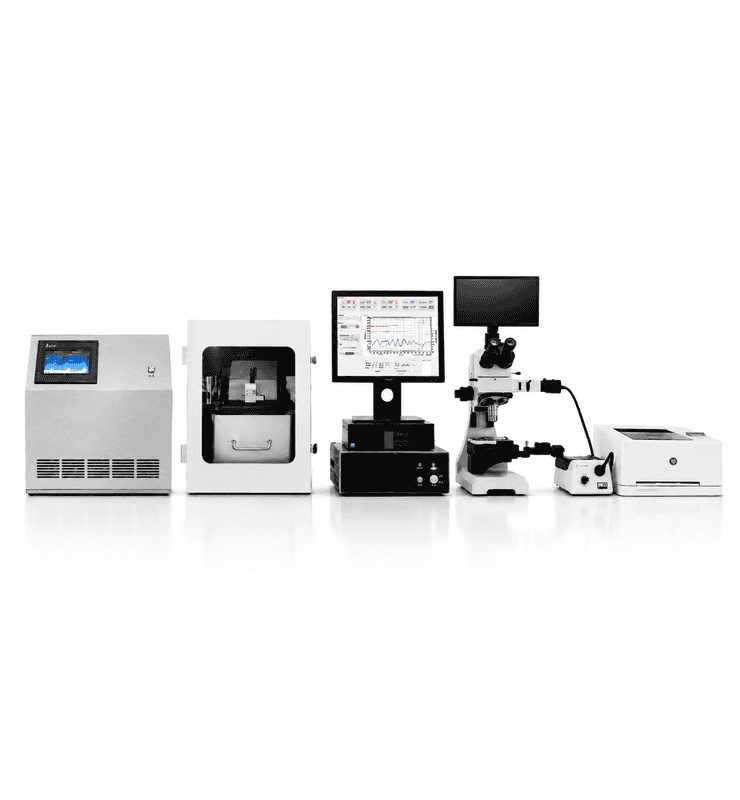
High-frequency reciprocating tester main unit
主机
High-frequency reciprocating tester main unit
主机

Technical Introduction, Supported Consumables, Maintenance Specifications, and Frequently Asked Questions for the HFRR Test System

1. Overview of the HFRR Test System

The High-Frequency Reciprocating Rig, abbreviated as HFRR, is independently developed by Beijing Chaoyang Gaoke Applied Technology Research Institute Co., Ltd. It is designed for the laboratory evaluation of diesel fuel lubricity.

The final system configuration is determined according to the applicable industry standards, specified test methods, laboratory site conditions, and the formally agreed technical specifications.

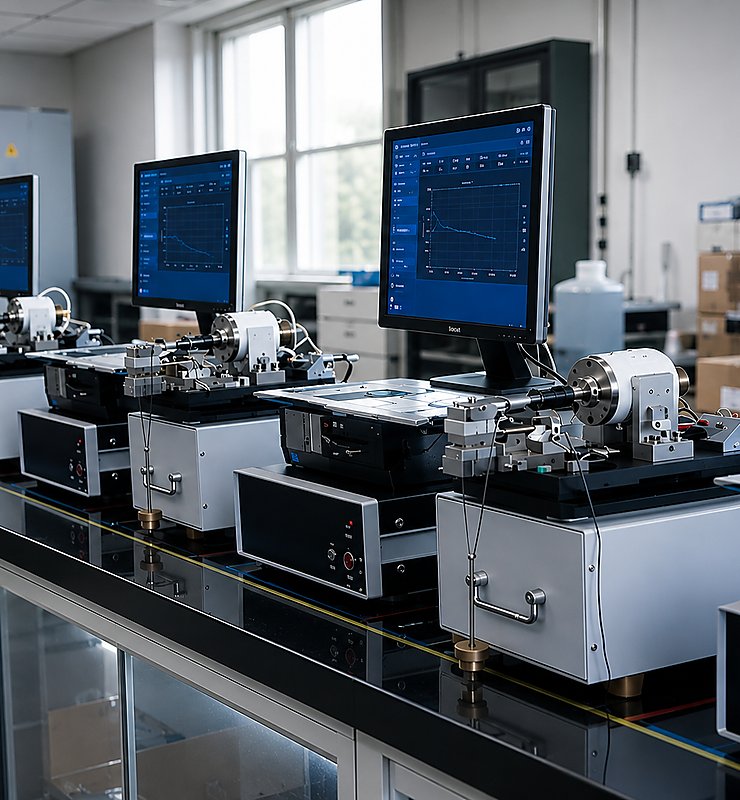
The HFRR system adopts a modular design and can be configured according to specific testing requirements. Its main functional modules include test control, temperature regulation, environmental condition monitoring, real-time parameter display, automatic test data acquisition and recording, wear scar observation and measurement, and comprehensive test result management.

The system supports test standards including NB/SH/T 0765-2021, ISO 12156-1, ASTM D6079, and ASTM D7688, allowing standardized and repeatable evaluation of diesel fuel lubricity.

Technical services are available throughout the equipment lifecycle, including instrument selection, installation and commissioning, operating guidance, routine maintenance, and professional matching of HFRR consumables.

2. Core Consumables and Standard Operating Requirements

2.1 HFRR Test Balls and Discs

Test balls and discs are key consumables used in HFRR diesel fuel lubricity testing. Their material properties, dimensional tolerances, surface hardness, geometric integrity, cleanliness, and storage conditions can significantly affect the accuracy and repeatability of test results.

All test specimens should comply with the technical requirements of the applicable standard test method.

During test preparation, direct contact with the friction surfaces of the test ball and disc should be avoided to prevent contamination. Standardized cleaning procedures should be strictly followed before each test.

Test balls and discs should be stored in sealed protective packaging to prevent surface contamination, corrosion, or mechanical damage.

The batch information of all consumables should be clearly identified and recorded in accordance with the laboratory quality management system to ensure full traceability of the test process.

2.2 HFRR Reference Fluids

HFRR standard reference fluids are commonly used for instrument performance verification, laboratory quality control, and test method validation.

The selected reference fluid should be suitable for the applicable test method and intended testing application.

Complete documentation relating to the reference fluid should be retained throughout its period of use. The documentation should include storage conditions, expiry date, batch information, and original test data.

When evaluating reference fluid test results, the instrument condition, environmental parameters, consumable quality, and compliance with standardized test procedures should be considered together to ensure the reliability of the verification results.

3. Routine Maintenance Specifications

As with other laboratory analytical instruments, the HFRR test system requires regular inspection, cleaning, and maintenance to maintain stable operation and consistent test results.

The standard maintenance scope generally includes the following items.

1.Thoroughly clean all components that come into contact with the test sample.

2.Inspect the operating condition of all mechanical moving parts.

3.Inspect the structural condition of fixtures, fasteners, and connecting components.

4.Calibrate and verify the temperature control system.

5.Check the operating performance of environmental sensors.

6.Verify the function of the microscopic observation and imaging system.

7.Regularly back up the system software and historical test data.

8.Replace worn, damaged, or degraded components when necessary.

9.Record and archive all maintenance activities in detail.

Maintenance intervals should be determined according to the official instrument manual, actual operating frequency, equipment condition, and the standardized laboratory management procedures.

4. Technical Questions and Systematic Explanations

4.1 Test Principle and Main Evaluation Parameter

The HFRR system quantitatively evaluates the lubricity of diesel fuel under standardized laboratory conditions.

The wear scar diameter formed on the test ball is used as the main evaluation parameter.

When the same test method and controlled environmental conditions are applied, a smaller wear scar diameter generally indicates better diesel fuel lubricity.

However, test results obtained under different standards, laboratory conditions, instruments, or environmental conditions should not be directly compared without appropriate technical verification.

4.2 Applicability to Diesel Fuel Containing Lubricity Additives

Current mainstream HFRR test standards generally cover diesel fuels both with and without lubricity additives.

Before testing, the laboratory should confirm whether the selected test method is applicable to the specific fuel type and additive formulation being evaluated.

This confirmation helps ensure the validity and technical relevance of the test results.

4.3 Relationship Between HFRR Test Data and Actual Engine Performance

HFRR testing provides a standardized and controlled laboratory evaluation of diesel fuel lubricity.

However, laboratory test results cannot fully predict or guarantee actual engine performance, component durability, or field operating results.

Actual engine performance may also be affected by fuel composition, engine structure, component materials, operating conditions, maintenance practices, and other factors.

4.4 Causes of Interlaboratory Test Variations

Differences in HFRR test results between laboratories may be caused by several factors.

These factors may include sample condition, contamination level, storage period, storage conditions, environmental temperature, environmental humidity, specimen cleanliness, instrument operating stability, operator proficiency, and the degree of standardization of the test procedure.

When significant data deviation occurs, the laboratory should review the complete original test records and conduct controlled parallel tests to verify the results.

4.5 System Configuration Selection and Operator Training

Laboratories should select an appropriate HFRR system configuration according to their actual testing requirements.

The main considerations may include the applicable test standards, laboratory environmental conditions, data reporting requirements, expected annual testing volume, consumable matching requirements, software functions, and technical service requirements.

The manufacturer may provide a proposed system configuration for technical review and confirmation based on the information supplied by the customer.

Professional operator training is important for maintaining continuous and consistent testing.

Sample pretreatment, specimen cleaning, test parameter settings, environmental control, and wear scar measurement can all significantly affect test repeatability and data stability.

The detailed scope of operator training may be agreed with the equipment supplier according to the actual needs of the laboratory.

5. Technical Consultation and Service Support

Beijing Chaoyang Gaoke Applied Technology Research Institute Co., Ltd. provides technical consultation and service support for HFRR diesel fuel lubricity test systems, test balls and discs, standard reference fluids, system configuration optimization, equipment maintenance, and after-sales technical services.

To improve the efficiency of technical consultation, customers are advised to provide detailed information, including the target test standard, laboratory location, expected testing volume, preferred test method, required software functions, and the required list of consumables and accessories.

6. Technical Statement

The functional parameters, system configuration, and applicable test methods of Beijing Gaoke HFRR systems may vary according to the equipment model, selected configuration, and contractual technical agreement.

All testing operations should be carried out in accordance with the latest official product manual, formally agreed technical specifications, applicable industry standards, and the laboratory quality management system.


This device is suitable for testing the lubricity of diesel, gasoline, methanol fuel, and marine methanol fuel simultaneously. For more details, please contact our organization. 

Oscillation frequency: 50±1 Hz, adjustable from 10 to 500 Hz; 

2. Vibration stroke: 1±0.02 mm, adjustable between 20 μm and 2.0 mm; 

3. Test oil temperature: 60±1°C, adjustable from room temperature to 150°C; 

4. Test load: 200±1g, adjustable between 0.1 and 1 kg; 

5. Oil sample volume: 2.0±0.2 mL; 

6. Oil pan surface area: 600±100 mm²; adjustable to 1470±100 mm² 

7. Test duration: 75 ± 0.05 minutes, the test will automatically stop when time is up; 

8. Scratch measurement: equipped with a metallographic microscope and an electronic imaging system, featuring an X/Y bidirectional reader with a resolution of 2592×1944 pixels; 

9. Test ball: diameter 6 mm, Rockwell hardness HRC 58–66, surface roughness Ra < 0.05 μm; 

10. Test specimen: Vickers hardness "HV30" of 190–210, surface roughness Ra < 0.02 μm; 

11. Constant Temperature and Humidity Control System: 

11.1 The chamber temperature is 23±1°C and the relative humidity is 53±3% RH, which can be set according to the requirements of the test method standard. 

11.1 The equipment meets the requirements for environmental temperature and humidity control specified in the test method standards NB/SH/T 0765, ISO 12156.1, ASTM D6079, ISO 6583, T/CERS 0017, T/GZHX 001, and IP-PM-FK


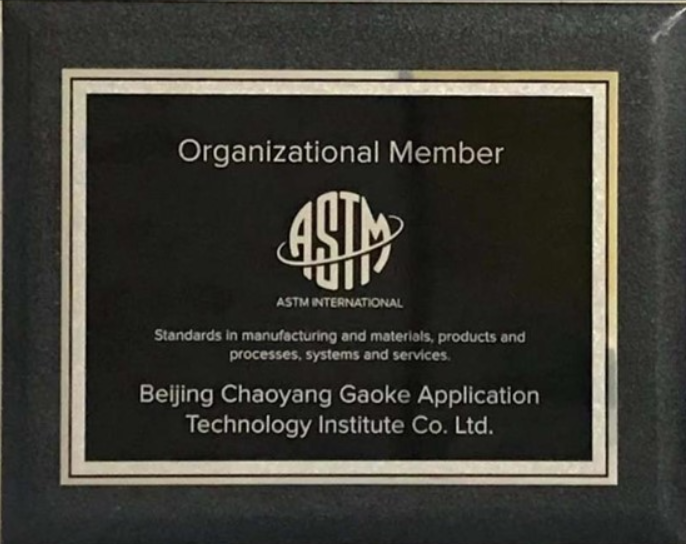
Beijing Gaoke is a member of the ASTM Standards Committee and has participated in multiple batches of ASTM Proficiency Testing Programs (PTP). 

ASTM Proficiency Testing Programs (PTP) are statistical quality assurance programs that enable laboratories to evaluate and improve performance, as well as maintain and meet mandatory accreditation requirements.
c377d3c4c46e103598d61d8d122107ef.png